How I Stay Mentally Strong by Loving What I Do—Every Single Day
You’ve probably felt it—the weight of stress, the fog of overthinking, the quiet burnout no one talks about. I did too, until I realized my hobbies weren’t just distractions; they were lifelines. Over years, I’ve leaned into simple, repeatable passions that quietly reshaped my mental resilience. This isn’t about quick fixes. It’s about what happens when you make joy a long-term habit. Let me show you how small, consistent joys can become powerful psychological anchors.
The Hidden Crisis of Modern Mental Fatigue
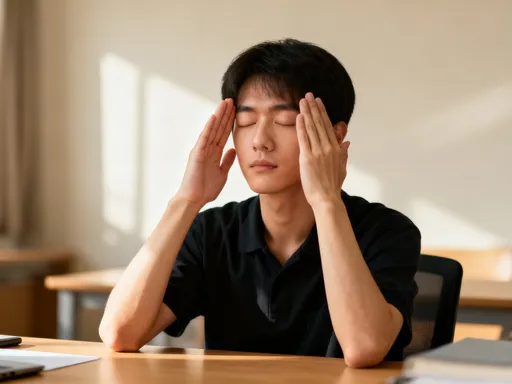
In today’s world, mental fatigue often creeps in quietly. It’s not always dramatic anxiety or clinical depression—sometimes it’s the low hum of being overwhelmed, the feeling that you’re moving through your day on autopilot. Many women between 30 and 55 report this subtle but persistent exhaustion: the kind that doesn’t show up on a doctor’s chart but wears down confidence, patience, and emotional clarity. Responsibilities pile up—managing households, supporting children, caring for aging parents, and often maintaining a career—all while trying to stay connected to oneself. This chronic state of mental load can lead to emotional numbness, irritability, and a quiet sense of isolation, even when surrounded by family.
Traditional coping strategies like scrolling through social media, watching TV, or taking short breaks often fail to restore genuine energy. These activities may offer momentary relief, but they rarely provide deep emotional replenishment. In fact, passive consumption can deepen mental fatigue by reinforcing a sense of disconnection from meaningful action. The brain doesn’t rest from distraction—it rests from engagement that feels purposeful and self-directed. This is where the overlooked power of hobbies comes in. They are not escapes from life but reconnections to it, offering a space where choice, creativity, and personal rhythm are restored.
Sustainable mental health isn’t built through occasional relaxation but through daily practices that reinforce a sense of agency. When we engage in activities simply because they bring us quiet satisfaction, we begin to rebuild our inner compass. Hobbies offer a rare opportunity to act without external pressure, to make choices based on curiosity rather than obligation. Over time, this restores a sense of control that counteracts the helplessness often tied to chronic stress. The key is not to find a perfect hobby but to recognize that any small, repeated act of self-chosen joy can begin to shift the mental landscape.
Why Hobbies Are More Than Just Pastimes
For many, the word “hobby” conjures images of weekend crafts or seasonal gardening—a pleasant but optional part of life. Yet research in psychology and neuroscience reveals that hobbies are far more than leisure; they are essential tools for emotional regulation and cognitive health. When we engage in an activity we enjoy, the brain releases dopamine, a neurotransmitter linked to motivation, pleasure, and focus. Unlike the fleeting dopamine spikes from digital notifications, the kind released during sustained creative effort is steady and restorative, supporting long-term emotional balance.
One of the most powerful psychological benefits of hobbies is their ability to induce a state of flow. First described by psychologist Mihaly Csikszentmihalyi, flow occurs when a person is fully immersed in an activity that challenges their skills just enough to hold attention without causing frustration. In this state, time seems to dissolve, self-criticism fades, and the mind finds temporary relief from rumination. Activities like knitting, painting, playing a musical instrument, or even baking can create flow when approached with mindful attention. This mental state is not just enjoyable—it actively reduces activity in the brain’s default mode network, the area associated with overthinking and anxiety.
Long-term hobby practice has been linked to measurable improvements in mental health. A 2020 study published in the British Journal of Psychiatry followed adults over 50 and found that those who regularly engaged in creative or physical hobbies had a significantly lower risk of developing depression, even when facing life stressors. The benefits were not tied to talent or output but to consistency and personal meaning. This suggests that the therapeutic value of a hobby lies not in the end product but in the process itself—the rhythm of hands working, the focus of the mind, the quiet pride in showing up for oneself. In this way, hobbies become silent teachers of resilience, teaching patience, persistence, and self-trust through repetition.
Finding the Right Fit: What Makes a Hobby Therapeutic?
Not all hobbies are equally beneficial for mental health. The key difference lies in whether an activity fosters active engagement or passive consumption. Watching a movie can be relaxing, but it does not offer the same psychological nourishment as painting one, no matter how simple. Therapeutic hobbies share three core qualities: autonomy, progression, and intrinsic reward. Autonomy means the activity is chosen freely, without external pressure. Progression refers to the ability to improve or evolve within the activity, even in small ways. Intrinsic reward means the satisfaction comes from the act itself, not from praise, likes, or measurable outcomes.
For example, gardening offers all three. A woman may choose to grow herbs on her windowsill not because she needs to, but because she enjoys watching life emerge from soil. Over time, she learns what each plant needs, observes changes in growth, and feels a quiet sense of accomplishment when she harvests her first sprigs of basil. There’s no audience, no competition—just a personal connection to a living process. Similarly, journaling, woodworking, cooking new recipes, or learning to play the piano can provide deep emotional grounding when approached with curiosity rather than perfectionism.
Personality and life stage also influence what kind of hobby feels most sustaining. Someone who thrives on structure may find peace in quilting or model-building, where patterns and precision offer comfort. Another who values emotional expression might gravitate toward writing poetry or working with clay. The goal is not to mimic others’ passions but to listen to what brings a subtle lift to your mood, a moment of presence, or a spark of curiosity. Often, the most healing hobbies are those that reconnect us with a forgotten part of ourselves—a childhood love of drawing, a long-abandoned interest in birds, or a simple joy in arranging flowers. These are not indulgences; they are acts of reclamation.
Building Mental Resilience Through Repetition, Not Intensity
Many people assume that to benefit from a hobby, they must devote hours or achieve mastery. But the real power of hobbies lies in consistency, not intensity. A 15-minute daily walk with attention to nature, five minutes of stretching with focus on breath, or writing three sentences in a journal—these small acts, repeated over time, build mental strength more effectively than occasional grand efforts. The brain learns resilience through repetition, not through rare bursts of inspiration. Each time a person returns to a chosen activity, they reinforce a quiet message: I am worth the time. My well-being matters.
This regularity strengthens emotional regulation. When life brings setbacks—missed deadlines, family conflicts, unexpected expenses—the ability to return to a familiar, comforting activity provides stability. A woman who knits every evening may find that the rhythmic motion helps her process the day’s tensions without needing to talk them through. Another who bakes on weekends may discover that the ritual of measuring, mixing, and waiting restores a sense of order when life feels chaotic. These routines become psychological anchors, offering a predictable space of calm in an unpredictable world.
Over time, this builds self-trust. When we keep a small promise to ourselves—like spending 10 minutes on a puzzle or tending to houseplants—we strengthen our internal reliability. This may seem minor, but it counters the erosion of self-worth that often accompanies chronic stress. The woman who consistently shows up for her hobby, even in small ways, begins to believe she can show up for other challenges too. This is not about productivity; it’s about presence. The hobby becomes a mirror of self-respect, reflecting the quiet truth that caring for oneself is not selfish—it is necessary.
Overcoming the “I Don’t Have Time” Trap
One of the most common barriers to starting or sustaining a hobby is the belief that there is simply no time. Between work, family, and household demands, adding another task can feel impossible. Yet this mindset often confuses time with priority. Many women report feeling guilty for taking time for themselves, as if self-care is a luxury reserved for when everything else is perfect. But mental health is not a reward for finishing all tasks—it is a foundation for managing them. Making space for a hobby is not about finding extra hours but about redefining what matters.
Shifting this perspective begins with reframing hobbies as essential, not optional. Just as brushing your teeth is non-negotiable for physical health, engaging in a small daily joy is vital for emotional well-being. The key is integration, not addition. Micro-sessions—five to ten minutes of coloring, humming a tune while folding laundry, or arranging a small bouquet of flowers—can be woven into existing routines. These moments don’t require a special schedule; they simply require intention. Over time, these fragments accumulate into a meaningful practice.
Another helpful strategy is to pair a hobby with an existing habit, a technique known as habit stacking. For example, listening to a language-learning podcast while preparing breakfast, or journaling for five minutes after morning tea. These pairings reduce the mental effort of starting, making it easier to maintain consistency. It’s also important to release the pressure of “doing it right.” A crooked stitch in embroidery, a slightly burnt batch of cookies, or a forgotten lyric in a song—none of these diminish the mental benefits. The act of showing up, imperfectly and gently, is what rebuilds resilience.
From Escape to Empowerment: Shifting Your Mindset
For many, hobbies are seen as guilty pleasures—something to enjoy only after everything else is done. But when we reframe hobbies as tools for mental strength, their value transforms. They are not escapes from responsibility but investments in the self, enabling greater patience, clarity, and emotional availability in daily life. A woman who spends 20 minutes sketching each evening may return to her family with a calmer mind and a more open heart. The hobby doesn’t take away from her role as a mother or partner—it enhances it.
This shift requires moving from outcome-focused to process-focused engagement. When we measure a hobby by results—how beautiful the painting is, how fast we knit a scarf, how perfectly the cake turns out—we reintroduce pressure and comparison. But when we focus on the experience—the feel of the brush on paper, the rhythm of the needles, the smell of vanilla in the oven—we reclaim the joy of doing for its own sake. This mindset reduces performance anxiety and increases emotional satisfaction, making the activity more sustainable over time.
It also fosters self-compassion. In a world that often measures worth by productivity, hobbies offer a rare space where being is enough. There is no report card, no evaluation, no need to prove anything. This unconditional acceptance, even in a small corner of life, can ripple outward, softening our inner critic and expanding our capacity for kindness—toward ourselves and others. The hobby becomes not just a pastime but a sanctuary, a place where we remember who we are beyond our roles and responsibilities.
Creating a Lifelong Habit Loop: Start Small, Stay Connected, Keep Evolving
Building a lasting hobby practice begins with a single, tiny step. Choose an activity that sparks even a flicker of interest—something that feels accessible, not overwhelming. It could be arranging photos, learning a few chords on a ukulele, or planting a single herb in a pot. The goal is not mastery but continuity. Commit to just five minutes a day, or three times a week. Use a simple calendar or journal to mark each attempt, not to track perfection but to honor the effort. Over time, these small acts accumulate into a rhythm that feels natural and sustaining.
Staying connected to the practice means noticing the subtle shifts. You may not feel dramatically different after a week, but over months, you might notice you’re less reactive to stress, more patient with your children, or more willing to rest when tired. These are signs of growing resilience. Celebrate them, even silently. Progress in emotional well-being is rarely linear; there will be days when motivation fades. On those days, lower the bar even further—just open the sketchbook, just hold the knitting needles, just water the plant. Showing up, in any form, keeps the habit alive.
Finally, allow the hobby to evolve. Interests change, and that’s okay. A woman who once loved quilting may later find peace in birdwatching. What matters is the continuity of engagement, not the specific activity. The deeper habit is not the hobby itself but the commitment to nurturing joy. Over decades, this practice becomes a quiet form of self-respect—a daily affirmation that your inner life matters. In a world that often asks women to give endlessly, loving what you do, every single day, becomes a radical act of balance, strength, and quiet courage.