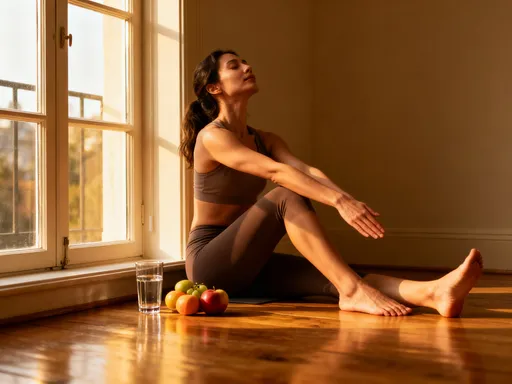
Breathe Through the Storm: How I Tamed My Emotions with Simple Breath Work
Ever felt overwhelmed by stress, anxiety, or sudden emotional waves? You're not alone. I used to get hijacked by my feelings—until I discovered the quiet power of breathing exercises. No pills, no drastic changes—just intentional breath. Science shows breath shapes emotion, and with practice, it can become your most portable, powerful tool for inner balance. This is how I learned to stay calm, clear, and in control—starting with a single breath. What began as a moment of desperation turned into a daily practice that reshaped my emotional resilience, focus, and overall well-being. And the best part? It costs nothing, requires no equipment, and can be done anywhere, anytime.
The Emotional Rollercoaster: Why We Lose Control
Life rarely unfolds exactly as planned. For many women in their 30s, 40s, and 50s, daily life often feels like a balancing act—managing careers, family responsibilities, aging parents, household duties, and personal goals. Amid these demands, emotional overwhelm can strike without warning. A missed deadline, a tense conversation with a teenager, an unexpected bill, or even a quiet moment of reflection can trigger waves of anxiety, frustration, or sadness. These reactions are not signs of weakness—they are natural responses to accumulated stress and emotional load.
What many don’t realize is that emotions are not just mental experiences—they are deeply physical. When stress arises, the body responds immediately. The chest tightens, shoulders creep up toward the ears, the jaw clenches, and breathing becomes shallow and rapid. This physical shift is not random; it is part of the body’s survival mechanism. The autonomic nervous system kicks into high gear, preparing for perceived threat. But in modern life, these threats are rarely physical. Instead, they are emotional—worries about the future, regrets about the past, or fears of not being enough. Yet the body reacts as if danger is imminent.
This cycle of emotional and physical reactivity is known as emotional dysregulation. It occurs when the brain and body struggle to return to a state of calm after stress. Over time, repeated episodes can lead to chronic tension, fatigue, difficulty concentrating, and even disrupted sleep. The impact is real and cumulative. A mother who snaps at her child after a long day isn’t failing as a parent—she’s experiencing the effects of an overtaxed nervous system. The good news is that regulation is possible. And one of the most immediate, accessible tools for restoring balance lies in something we do thousands of times a day without thinking: breathing.
Breathing is unique among bodily functions because it operates automatically, yet can also be consciously controlled. This dual nature makes it a powerful bridge between the mind and body. By intentionally changing the rhythm of the breath, we send direct signals to the brain about safety and calm. Unlike other self-regulation strategies that require time, space, or resources, breathwork is always available. It doesn’t require a yoga mat, a meditation app, or a quiet room—though those can help. It only requires awareness and a few conscious breaths. The journey toward emotional stability often begins not with grand changes, but with a simple decision to breathe with intention.
Breath and the Brain: What Science Actually Says
The connection between breath and emotion is not just poetic—it is rooted in neuroscience. The human body operates through two branches of the autonomic nervous system: the sympathetic and the parasympathetic. The sympathetic nervous system is responsible for the “fight-or-flight” response. When activated, it increases heart rate, sharpens focus, and redirects blood flow to muscles—preparing the body to respond to danger. This system evolved to protect us from immediate threats, like predators or physical harm. But in today’s world, it often activates in response to emails, traffic jams, or financial worries—situations that don’t require physical escape but still trigger the same physiological cascade.
In contrast, the parasympathetic nervous system governs the “rest-and-digest” state. It slows the heart rate, supports digestion, and promotes relaxation and recovery. When this system is dominant, the body feels safe, and the mind becomes more reflective and less reactive. The key to emotional regulation lies in the ability to shift from sympathetic dominance to parasympathetic activation. And one of the most effective ways to do this is through controlled breathing.
Slow, deep breathing directly stimulates the vagus nerve—the longest cranial nerve in the body, which connects the brain to major organs including the heart, lungs, and digestive tract. This nerve acts as a biological brake on the stress response. When activated through extended exhalations, it signals the brain that danger has passed, prompting a cascade of calming effects. Heart rate slows, blood pressure decreases, and stress hormones like cortisol begin to decline. Research published in the journal *Frontiers in Psychology* has shown that regular breathwork can significantly reduce anxiety and improve emotional regulation. Another study in *The Journal of Alternative and Complementary Medicine* found that participants who practiced slow breathing for just 20 minutes a day experienced measurable reductions in stress markers within weeks.
These benefits are not mystical or unproven—they are physiological. When you breathe slowly and deeply, you are not merely relaxing your mind; you are changing your body’s chemistry. The brain interprets the rhythm of the breath as a sign of safety. A rapid, shallow breath says “danger”; a slow, full breath says “all is well.” This is why breathwork is used by elite athletes, military personnel, and trauma therapists. It is not a fringe practice—it is a scientifically supported method for enhancing mental clarity, emotional stability, and physical health. And unlike medication or therapy, which are important but not always immediately accessible, breathwork is free, private, and always within reach.
My First Try: Skeptical but Desperate
I didn’t come to breathwork out of curiosity. I came to it out of necessity. A few years ago, I found myself standing backstage before a work presentation, heart pounding, palms sweating, and mind racing. I had prepared for weeks, but in that moment, all I could think was, “I’m going to fail.” My breath was quick and high in my chest, and I felt like I couldn’t get enough air. I remember leaning against the wall, trying to steady myself, when a colleague quietly said, “Try breathing. In for four, hold for four, out for six.” I looked at her like she was speaking another language. “You mean… just breathe?” But I was desperate enough to try anything.
I closed my eyes and followed her guidance. I inhaled slowly through my nose, counting to four. I held the breath briefly, then exhaled through my mouth for six counts. At first, it felt awkward. I wasn’t sure if I was doing it right. My mind kept wandering—thinking about the audience, the slides, what people would think. But I kept going, repeating the cycle four or five times. And then, something shifted. The tightness in my chest eased. My shoulders dropped. The voice in my head that had been shouting “You’re going to mess up!” quieted down. I still felt nervous, but the panic had receded. I walked on stage with a sense of calm I hadn’t expected.
That moment was a turning point. It wasn’t that I suddenly became fearless or that all my stress disappeared. But I realized something important: I had a tool. For years, I had believed that my emotions were something that happened to me—unpredictable and uncontrollable. But in those few minutes of focused breathing, I experienced a sense of agency. I hadn’t changed the situation, but I had changed my response to it. That small shift made all the difference. After that day, I began reading more about breathwork. I learned about different techniques, their origins, and their effects. I started practicing not just before stressful events, but during quiet moments at home. What began as a survival tactic became a daily ritual—a way to reconnect with myself in the midst of a busy life.
The beauty of that first experience was its simplicity. I didn’t need special training, a quiet retreat, or hours of practice. I needed just one minute of attention. And in that minute, I discovered that calm is not the absence of stress—it is the ability to return to balance, again and again. That realization changed how I viewed my emotions. Instead of seeing them as enemies to be suppressed, I began to see them as signals—important messages from my body and mind. And breath became my way of listening.
The 4-7-8 Method: My Go-To for Instant Calm
Among the many breathing techniques I’ve tried, the 4-7-8 method has become my most trusted tool for immediate relief. Developed by Dr. Andrew Weil, this technique is based on ancient pranayama practices and designed to activate the parasympathetic nervous system quickly. The pattern is simple: inhale through the nose for a count of four, hold the breath for seven counts, and exhale slowly through the mouth for eight counts. The extended exhale is the key—it prolongs the out-breath, which directly stimulates the vagus nerve and signals the body to relax.
When I first learned this method, I was surprised by how difficult the timing felt. Counting while breathing required focus, and holding the breath for seven seconds seemed impossible at first. But with practice, it became natural. I started by doing just one or two cycles, especially when I felt my stress rising. Over time, I built up to four full rounds, which takes about a minute and a half. The effects are often noticeable within minutes. My heart rate slows, my thoughts become less frantic, and I feel a gentle sense of grounding.
To practice the 4-7-8 method effectively, posture matters. I usually sit in a chair with my feet flat on the floor, hands resting on my lap, and spine straight but not rigid. This position supports diaphragmatic breathing—deep breaths that expand the belly rather than the chest. I close my eyes to minimize distractions and focus on the counting. The inhale should be smooth and quiet; the hold should feel stable, not strained; and the exhale should be slow and complete, like gently blowing out a candle. If the counts feel too long at first, it’s okay to adjust—many people start with 4-4-6 and work their way up.
I use this technique in specific moments: when I wake up anxious, before bedtime to quiet my mind, during disagreements with loved ones, or when I feel overwhelmed by tasks. It’s especially helpful at night, when racing thoughts can make sleep elusive. Instead of lying in bed replaying the day, I do a few rounds of 4-7-8 breathing. It doesn’t always make me fall asleep immediately, but it shifts my state from alert to receptive. Over time, my body has begun to associate this pattern with safety and rest. The 4-7-8 method isn’t a cure for stress, but it is a reliable way to interrupt the stress response and create space for calm. For anyone looking for a practical, evidence-based tool to manage emotions, this is one of the most effective places to start.
Box Breathing: Focus and Emotional Reset
While the 4-7-8 method is ideal for calming intense emotions, I’ve found another technique equally valuable for regaining mental clarity: box breathing. Also known as square breathing, this method follows a 4-4-4-4 pattern—inhale for four counts, hold for four, exhale for four, and hold again for four. The even, symmetrical rhythm creates a sense of balance and focus. Unlike techniques that emphasize long exhalations, box breathing is about creating stability and neutrality. It doesn’t aim to induce deep relaxation as much as it aims to reset the nervous system and bring the mind back to the present.
I first encountered box breathing during a particularly difficult conversation with a family member. Emotions were high, voices were raised, and I felt myself slipping into defensiveness. I realized I was about to say something I’d regret. So, I excused myself for a moment, stepped into another room, and did two minutes of box breathing. I focused on the count, the rhythm, the sensation of air moving in and out. When I returned, I wasn’t completely calm, but I was no longer reactive. I could listen without interrupting, speak without shouting, and respond instead of reacting. That small pause made the difference between escalation and resolution.
The power of box breathing lies in its simplicity and versatility. It doesn’t require a quiet space or closed eyes—though those help. I’ve practiced it at my desk, in the car at a red light, and even while waiting in line at the grocery store. The four-part structure gives the mind a task to focus on, which reduces mental chatter. It also regulates heart rate variability, a key marker of emotional resilience. Studies have shown that consistent box breathing can improve attention, reduce anxiety, and enhance decision-making under pressure. It’s no surprise that it’s used by Navy SEALs and emergency responders—professions where clarity under stress is critical.
For women juggling multiple roles, this technique offers a way to reclaim focus in the midst of chaos. It doesn’t erase stress, but it creates a pocket of calm within it. I recommend starting with just one or two minutes a day—perhaps in the morning with your coffee or during a midday break. Over time, the practice builds what psychologists call “emotional agility”—the ability to move through emotions without being controlled by them. Box breathing won’t solve every problem, but it can change how you face them. And that shift, small as it may seem, can ripple through every area of life.
Daily Integration: Making Breath Work a Habit
Knowing a technique is one thing; practicing it regularly is another. Like many women, I’ve struggled with consistency. Life gets busy. Responsibilities pile up. And even the simplest habits can fall by the wayside. The key, I’ve learned, is not willpower—it’s integration. Breathwork doesn’t have to be a separate event in your day. It can be woven into moments you’re already experiencing. The goal is not perfection, but presence.
One of the most effective strategies I’ve used is pairing breathwork with daily cues. For example, every time I brew my morning coffee, I take three slow, deep breaths before the kettle boils. While waiting for an email to load, I practice a round of 4-7-8 breathing. At red lights, instead of reaching for my phone, I check in with my breath. These micro-moments add up. They don’t require extra time, but they create space for awareness. Over time, they become automatic—like brushing your teeth or locking the door.
Starting small is essential. I began with just two minutes a day—sometimes less. The goal wasn’t to master the technique but to build the habit. On days when I felt resistant, I reminded myself that even one conscious breath was a win. I also began tracking how I felt before and after. I didn’t use a formal journal—just mental notes. “I felt tense before, but now I’m a little more relaxed.” These subtle shifts reinforced the value of the practice. I wasn’t chasing dramatic transformations; I was cultivating a quiet, steady sense of balance.
Another helpful step was creating a dedicated space. I chose a corner of my living room with a cushion and a small plant. It wasn’t elaborate, but it signaled to my brain that this was a place for pause. On days when I had more time, I’d sit there for five or ten minutes, practicing different techniques. But even when I couldn’t sit down, I carried the intention with me. Breathwork became less of a task and more of a companion—a quiet ally in the rhythm of daily life. The more I practiced, the more I noticed my breath in ordinary moments. I began to recognize when I was holding my breath during stressful tasks or breathing shallowly while working at my desk. These observations weren’t judgments—they were invitations to return to center.
When to Seek More Help: Breath as Support, Not a Cure
While breathwork has been transformative for me, I want to be clear: it is not a substitute for professional care. There are times when emotional distress goes beyond what self-regulation techniques can address. Persistent anxiety, clinical depression, trauma, or significant life changes may require the support of a therapist, counselor, or medical provider. Breathwork can be a valuable part of a broader wellness plan, but it should not replace evidence-based treatments when they are needed.
I’ve learned this through both personal experience and research. There was a period when I relied too heavily on breathing exercises to manage deep grief. While they helped me cope in the moment, I eventually realized I needed to talk to someone. Speaking with a therapist allowed me to process emotions at a deeper level—something breathwork alone couldn’t provide. The two approaches complemented each other: breathwork helped me manage my symptoms, while therapy helped me understand their roots.
It’s also important to recognize that everyone’s journey is different. What works for one person may not work for another. Some may find meditation more effective; others may benefit from movement, journaling, or creative expression. The goal is not to find a single solution, but to build a toolkit of strategies that support emotional well-being. Breathwork is a powerful tool, but it is one of many. And like any tool, it works best when used wisely and in the right context.
If you’re experiencing ongoing emotional challenges, please consider reaching out to a healthcare professional. There is no shame in asking for help. In fact, it is one of the bravest and most loving things you can do for yourself. Breathwork can empower you to take small, daily steps toward balance, but it does not have to carry the full weight of healing. True wellness comes from a combination of self-care, connection, and professional support when needed.
Conclusion: Your Breath, Your Anchor
Looking back, I see how far I’ve come—not because I’ve eliminated stress, but because I’ve changed my relationship with it. I no longer feel like a passenger on an emotional rollercoaster. I’ve learned to pause, to breathe, and to respond with intention. The journey wasn’t dramatic. There were no sudden breakthroughs or overnight transformations. It was built through small, consistent actions—moments of breath woven into the fabric of my days.
What I’ve discovered is that emotional resilience isn’t about being calm all the time. It’s about returning to calm, again and again. And the simplest way to begin that return is through the breath. It is always with you—free, silent, and powerful. You don’t need to be an expert. You don’t need special training. You only need to notice. Notice how you’re breathing right now. Is it shallow? Fast? Held? Or slow and steady? You don’t have to change anything—just observe. That act of awareness is the first step toward mastery.
For women navigating the complexities of modern life, breathwork offers a quiet revolution. It doesn’t change the world around you, but it changes how you move through it. It gives you a way to pause in the storm, to steady yourself, and to choose your next step with clarity. And in that choice, there is freedom. So take a breath. Just one. Let it be slow. Let it be deep. Let it remind you that you are here, you are capable, and you are never without resources. The power to calm your mind, steady your heart, and reclaim your peace begins with a single, conscious inhale.