This Is What Slow Travel Feels Like: Tasmania’s Hidden Rhythms Uncovered
You know that feeling when time slows down and every moment actually means something? That’s exactly what happened when I spent two weeks traveling through Tasmania—not racing from spot to spot, but truly living each day. From misty mountain hikes to quiet mornings with wallabies grazing nearby, this island doesn’t shout for attention—it whispers. And if you listen, it offers something rare: authenticity, stillness, and connection. This is slow travel at its finest. It is not about how many places you see, but how deeply you experience one. In a world that moves faster every year, Tasmania invites you to step off the conveyor belt of modern tourism and rediscover what it means to be present. Here, nature sets the pace, and every sunrise brings a chance to begin again, not with a checklist, but with curiosity.
The Philosophy Behind Slow Travel in Tasmania
Slow travel is more than a buzzword; it is a deliberate shift in how we engage with new places. At its core, it emphasizes presence over productivity, connection over consumption, and depth over distance. Rather than measuring success by the number of landmarks visited, slow travelers value the quality of their experiences—the warmth of a shared conversation, the rhythm of local life, the subtle shifts in light across a valley at dusk. Tasmania, with its vast wilderness and compact population, offers an ideal environment for this mindful approach. The island’s remote location and relatively low visitor numbers mean that many areas remain untouched by mass tourism, allowing for genuine interactions and unscripted moments.
What sets Tasmania apart is not just its scenery, but its pace. Towns like Stanley, Strahan, and Swansea operate on a different rhythm—one dictated by tides, seasons, and community. There are no grand monuments demanding queues, no overcrowded viewpoints where photos are taken through a wall of smartphones. Instead, travelers are invited to wander without urgency, to sit quietly by a river, or to linger over coffee while watching the morning mist lift from the hills. This absence of pressure creates space for reflection and discovery, making it easier to form real bonds with both people and place.
Contrast this with mainstream tourism, where itineraries are packed, schedules are tight, and experiences are often designed for social media appeal rather than personal meaning. In such models, destinations become items to be checked off, and the traveler remains a spectator. Slow travel flips this script. By staying longer in fewer places, engaging with local customs, and embracing unpredictability, visitors become participants in the life of a region. In Tasmania, this might mean joining a small-town festival, learning about native plants from a park ranger, or simply walking the same trail each morning and noticing how the ferns unfurl after rain. These quiet acts of attention cultivate a deeper understanding of the landscape and its people.
Choosing the Right Base: Staying Local in Cradle Mountain Village
One of the most effective ways to embrace slow travel is to choose a single base and let it become your temporary home. In the case of Tasmania’s northwest, Cradle Mountain Village serves as a perfect anchor. Nestled on the edge of Cradle Mountain-Lake St Clair National Park, this small settlement offers immediate access to some of the island’s most iconic natural wonders, yet remains far enough from urban centers to preserve its tranquility. Unlike larger cities where accommodations blend into anonymous chains, the lodges and guesthouses here are often family-run, infused with personal care and regional character.
Staying in one place for several days allows travelers to develop a relationship with their surroundings. You begin to recognize the same shopkeeper at the general store, learn which trail is best at sunrise, and notice how the light changes on the mountain face throughout the day. This consistency fosters a sense of belonging, even in a place you’re only visiting. More importantly, it gives locals the opportunity to see you not as a fleeting guest, but as someone invested in their community. Over time, these small recognitions build trust, opening doors to informal invitations—perhaps a recommendation for a hidden waterfall or an invitation to a backyard barbecue.
Take, for example, a modest lodge operated by a couple who have lived in the area for over two decades. Their breakfast table features homemade berry jam from their garden, freshly baked sourdough from a nearby bakery, and honey harvested from their own hives. Conversations at the table are unhurried, often turning into impromptu planning sessions where guests receive tailored hiking advice based on weather, fitness level, and interest. There are no scripted tours or rigid schedules—just genuine hospitality rooted in a love for the region. This kind of experience cannot be replicated in a hotel where staff rotate weekly and interactions are transactional. It is the product of time, continuity, and mutual respect.
Morning Rituals: Starting the Day Like a Local
In slow travel, rituals matter. Waking without an alarm, guided instead by the soft glow of dawn filtering through the curtains and the chorus of honeyeaters outside the window, sets a tone of calm intention. These small moments—stretching on the porch, brewing a pot of tea, watching a wallaby hop across the lawn—become part of a daily rhythm that grounds the traveler in the present. In Tasmania, where nature is never far away, mornings often unfold with a quiet sense of wonder, free from the rush of urban life.
One of the most rewarding routines is visiting a local farmers’ market. The Queen Victoria Market in Launceston, held every Saturday morning, is a vibrant yet unhurried gathering of growers, bakers, and artisans. Stalls overflow with seasonal produce: plump strawberries in late spring, crisp apples in autumn, and wild mushrooms foraged from nearby forests. The air carries the scent of wood-fired bread, roasting coffee, and fresh herbs. Here, transactions are more than exchanges of money—they are conversations. A cheesemaker might explain how she ages her brie using local molds, or a beekeeper might describe the floral sources that give his honey its unique flavor. These interactions deepen appreciation for the food and the people behind it.
Establishing a routine while traveling may seem counterintuitive—after all, isn’t variety the point of a trip? Yet repetition can be a source of comfort and connection. Returning to the same café, ordering the same flat white, and exchanging pleasantries with the barista creates a sense of familiarity in an otherwise unfamiliar place. Psychologically, these anchors help reduce the disorientation that can come with constant movement. More than that, they allow travelers to observe subtle changes: the way the light hits the market square at different times of year, the shift in produce from week to week, or the evolving relationships with vendors who begin to remember your name. In this way, routine becomes a form of attentiveness, a way of seeing more deeply because you are looking closely, again and again.
Hiking with Purpose: Cradle Mountain-Lake St Clair National Park
Hiking in Tasmania is not about conquering peaks or collecting summit photos—it is about immersion. Nowhere is this more evident than in Cradle Mountain-Lake St Clair National Park, a UNESCO World Heritage site that protects some of the last remaining cool temperate rainforests on Earth. The Dove Lake Circuit, a 6-kilometer loop around the base of Cradle Mountain, is one of the most popular walks on the island, yet it remains a profoundly meditative experience when approached with slowness and reverence.
Walking this trail without rushing allows the landscape to reveal itself gradually. At first, the mountain looms ahead, its dolerite columns shrouded in mist. As you move along the shoreline, reflections of the peaks shimmer in the still water, broken only by the occasional ripple of a diving duck. The path winds through dense myrtle and sassafras forests, where moss blankets every surface and the air feels cool and rich with oxygen. Stopping frequently—every hundred meters, even—enables a deeper observation: the intricate pattern of a spiderweb glistening with dew, the sound of a thylacine call echoing from the cliffs (though the species is extinct, the call of the native Tasmanian devil can sometimes be mistaken for it), or the sudden appearance of a pademelon hopping across the trail at dawn.
Wildlife here is not performative. Animals do not appear on cue for tourists. Instead, they go about their lives with quiet independence. A peregrine falcon circles high above the cliffs, riding thermal currents without a sound. A wombat trundles through the underbrush, indifferent to onlookers. These encounters are fleeting, unposed, and all the more meaningful for it. By moving slowly, staying quiet, and resisting the urge to chase after animals for a better photo, travelers increase their chances of witnessing authentic moments. More importantly, they learn to appreciate presence without possession—to see without needing to capture, to observe without disrupting.
Coastal Stillness: Exploring the Bay of Fires at Your Own Pace
If the mountains speak in hushed tones, the coast of northeastern Tasmania sings in color and light. The Bay of Fires, stretching over 50 kilometers from Binalong Bay to Eddystone Point, is named not for flames, but for the fires Captain Tobias Furneaux observed along the shore in 1773—fires lit by the Indigenous Pyrene people. Today, the region is renowned for its striking orange lichen-covered boulders, pristine white beaches, and turquoise waters that seem almost unreal in their clarity.
Yet the true magic of the Bay of Fires lies not in its postcard beauty, but in the sensory experience of being there. To walk this coastline slowly is to engage all the senses: the crunch of shell grit underfoot, the salty tang in the air, the warmth of sun-baked granite beneath your palms. One of the most transformative ways to experience it is by camping for several nights at one of the designated campgrounds. Without the pressure to cover ground, days unfold with a natural rhythm—morning swims, afternoon sketching or reading, evening meals cooked over a fire.
Disconnection from digital devices enhances this experience immeasurably. Without notifications, emails, or the need to post updates, the mind begins to quiet. Attention shifts inward and outward simultaneously: you notice the way the tide recedes differently each day, the patterns of gulls along the shore, the stars emerging one by one above the dunes. Journaling becomes a natural practice, not out of obligation, but as a way to process the richness of the experience. Children, if present, often thrive in this environment, building cairns, exploring rock pools, and inventing games with driftwood and sand. For adults, it is a rare opportunity to reclaim stillness, to remember what it feels like to be truly unplugged.
Engaging with Community: Farm Stays and Artisan Encounters
One of the greatest rewards of slow travel is the opportunity to connect with local communities in meaningful ways. In Tasmania, where agriculture and craftsmanship remain vital parts of rural life, visitors can engage directly with people who live close to the land. Farm stays, in particular, offer a window into a way of life that is increasingly rare in urbanized societies. Near the historic town of Oatlands, for instance, several working sheep farms welcome guests to participate in daily chores—feeding lambs, mending fences, or assisting with shearing during the spring months.
These are not staged performances for tourists. The work is real, sometimes messy, and always educational. You might learn how merino wool is graded, how lanolin is extracted, or why certain breeds are better suited to Tasmania’s cool climate. More than skills, however, you gain perspective—the patience required to care for animals, the resilience needed to face unpredictable weather, and the deep knowledge passed down through generations. Hosts often share stories over dinner, speaking not just about farming, but about the challenges and joys of rural life, the changing economy, and the importance of community support.
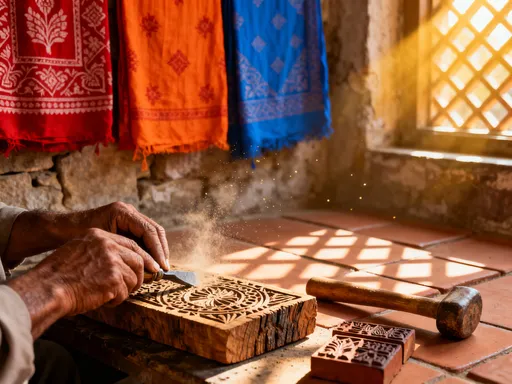
Similar authenticity can be found among Tasmania’s artisans. In the town of Sheffield, known as the “Town of Murals,” a ceramicist might invite you into her studio to demonstrate how she sources clay from nearby riverbeds and fires her pieces in a wood-burning kiln. Over a cup of peppermint tea, she might talk about the influence of Japanese wabi-sabi aesthetics on her work, or how the changing seasons affect the texture and color of her glazes. These exchanges are not transactions; they are conversations between curious minds. There is no pressure to buy, only the pleasure of shared interest. Such moments remind us that culture is not something to be consumed, but lived—and that the most memorable souvenirs are often intangible.
Traveling Light, Living Deep: Practical Tips for a Slower Pace
Adopting a slower pace requires intentionality in planning. The first step is to travel with less—both in luggage and in itinerary. Packing a lightweight suitcase with versatile clothing reduces stress and increases mobility. More importantly, planning fewer activities per day creates space for spontaneity. Instead of scheduling every hour, allow for long lunches, unplanned detours, or simply sitting on a bench and watching the world go by. These unstructured moments often become the most cherished parts of a trip.
Transportation choices also shape the experience. While renting a car offers flexibility, opting for a smaller, fuel-efficient vehicle encourages slower driving and more frequent stops. Alternatively, using regional buses or guided shuttles can reduce environmental impact and provide opportunities to meet fellow travelers and locals. Some routes, like the journey from Launceston to Stanley, pass through rolling farmland, historic villages, and coastal bluffs—scenery best appreciated at a moderate speed.
Timing is equally important. Visiting Tasmania during the shoulder seasons—autumn (March to May) or early spring (September to October)—offers several advantages. Roads are quieter, accommodations are more affordable, and the weather, while cooler, is often stable and crisp. Autumn brings golden hues to the highlands and abundant harvests at markets, while spring sees wildflowers bloom and newborn animals appear on farms. These seasons also foster more authentic interactions, as locals are less overwhelmed by tourist demand and more open to conversation. Ultimately, slow travel is not about luxury or exclusivity—it is about accessibility, mindfulness, and respect for the places we visit.
Conclusion: Why Slow Travel Isn’t Just a Trend—It’s a Reset
Tasmania does not change you overnight. Its power lies in accumulation—the quiet sum of mornings without alarms, conversations without agendas, walks without destinations. What begins as a vacation gradually becomes a recalibration of values. You start to measure richness not by how much you’ve seen, but by how deeply you’ve felt. The island teaches that beauty does not need to be loud, that connection does not require speed, and that presence is its own reward.
Slow travel, then, is not merely a style of tourism—it is a philosophy of living. It challenges the assumption that more is better and replaces it with the understanding that depth matters more than breadth. In Tasmania, this mindset finds fertile ground, nurtured by vast silences, enduring landscapes, and communities that value sustainability over spectacle. When you leave, you carry more than photographs; you carry a renewed sense of what it means to be fully awake in the world.
Imagine standing alone on the shores of Freycinet Peninsula at sunrise. The granite peaks glow pink in the morning light. The only sound is the wind moving through the banksias and the distant call of a currawong. There are no crowds, no guides, no schedules. Just you, the land, and the quiet certainty that you are exactly where you need to be. This is not escape. This is return. And it is always within reach, for anyone willing to slow down and listen.