Lost in the Rhythm of Yaoundé: Where Culture Comes Alive
You know that feeling when a city just surprises you? Yaoundé wasn’t on my radar, but wow—this place pulsed with something real. From drum circles in hidden courtyards to artisans shaping history with their hands, I was hooked. This isn’t just travel; it’s connection. If you're craving authentic cultural moments off the tourist trail, trust me—Cameroon’s capital delivers in ways you won’t expect. It doesn’t dazzle with neon or skyscrapers, but with the steady beat of life lived with intention. In Yaoundé, culture isn’t performed for cameras—it breathes in the streets, echoes in the hills, and invites you in with open hands.
First Impressions: Beyond the Expected Capital
Yaoundé defies the typical image of a national capital. There are no sweeping boulevards lined with monuments or tourist-centric districts designed for ease. Instead, the city unfolds across seven hills, each crowned with neighborhoods that blend colonial-era architecture, bustling markets, and dense greenery. The air carries the scent of damp earth after rain, mingling with woodsmoke and frying plantains. What strikes visitors first is not grandeur, but authenticity. Greetings here are not perfunctory—they are deliberate, often accompanied by a warm smile or a slight bow of the head. This is a city that values presence over spectacle.
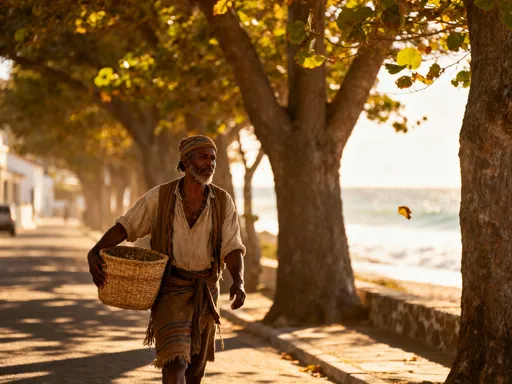
The rhythm of daily life is shaped by both tradition and adaptation. Moto-taxis, locally known as *bend-skins*, dart through traffic with a precision born of necessity, their drivers navigating narrow roads with practiced ease. Vendors balance baskets of mangoes, cassava, and spices on their heads, calling out prices in French, Ewondo, or Duala. In the morning light, women in colorful wrappers sweep doorsteps while children walk to school in neat uniforms. There’s a harmony to the chaos, a sense that every movement has purpose. Yaoundé does not rush to impress—it simply invites you to observe, to listen, and to feel its pulse.
Unlike capitals that prioritize modernization at the expense of character, Yaoundé maintains a balance between progress and heritage. Government buildings stand beside open-air markets where elders barter using gestures as much as words. Electricity and internet are available, yet many still rely on oral storytelling and communal gatherings to share news and wisdom. This duality is not a contradiction—it is the essence of the city. To understand Yaoundé, one must let go of expectations and embrace the idea that culture thrives not in museums, but in the everyday.
The Soul of the City: Traditional Music & Dance
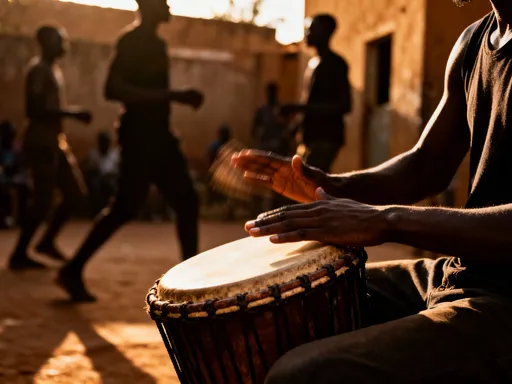
If Yaoundé has a heartbeat, it is found in its music. One evening, drawn by the deep, resonant thud of drums, I followed the sound into a quiet courtyard tucked behind a row of shops. There, under a string of bare bulbs, a circle of men and women danced barefoot, their bodies moving in perfect time with the rhythms. The drummers, seated on low stools, played with intensity and joy, their hands flying across the skins of *boum*, *ndeng*, and *mendeng* drums. Each beat carried meaning—some signaled celebration, others honored ancestors, and a few marked rites of passage like weddings or initiations.
Music in Yaoundé is not entertainment; it is communication. Stories are passed down through generations via song and rhythm, preserving history in ways that written text cannot. I later learned that certain drum patterns can mimic tonal speech, allowing messages to be sent across distances. During my stay, I attended a performance at the Institut National des Arts et de l'Action Culturelle (INAC), where a local ensemble demonstrated how specific dances correspond to agricultural cycles—planting, harvesting, and thanksgiving. The dancers wore costumes made of raffia and beads, their movements mimicking animals and natural forces.
I was invited to join a beginner’s drumming workshop led by a master musician named Joseph, whose family has played ceremonial music for over a century. He taught me that even a simple two-beat pattern must be played with intention. “It’s not about speed,” he said, “it’s about feeling the earth beneath your feet and letting the rhythm rise from there.” I struggled at first, my hands clumsy and out of sync, but with patience, I began to feel the pulse. That moment—sweaty, laughing, and slightly off-beat—was one of the most human experiences of my journey. These traditions are not relics; they are alive, evolving, and deeply cherished.
Hands That Shape Heritage: Exploring Local Craftsmanship
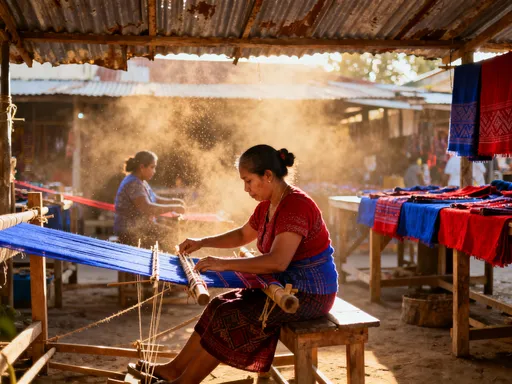
In Yaoundé, art is not confined to galleries or tourist stalls—it is woven into the fabric of daily life. At Mokolo Central Market, one of the city’s largest and most vibrant, artisans work in open-air stalls, their hands moving with quiet precision. Wooden masks hang from rafters, their exaggerated features carved to represent spirits, ancestors, or clan totems. Nearby, women weave intricate raffia baskets, their fingers flying as they loop and twist the fibers into patterns passed down through generations. The market is not just a place to buy goods; it is a living museum of craftsmanship.
I spent an afternoon with Madame Amina, a master carver in her sixties, who invited me into her workshop behind the market. Using a simple knife and chisel, she shaped a new mask from a block of ebony. “Each line has meaning,” she explained, pointing to the grooves around the eyes. “This one speaks of wisdom. This curve, strength. The color, usually red or black, comes from natural dyes—camwood or charcoal mixed with palm oil.” She told me that masks are not merely decorative; they are used in ceremonies to connect with the spiritual world, to teach lessons, or to mark important transitions.
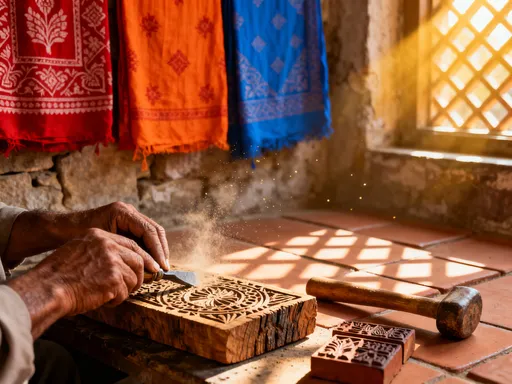
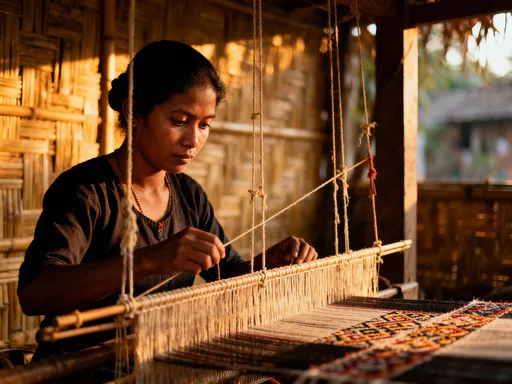
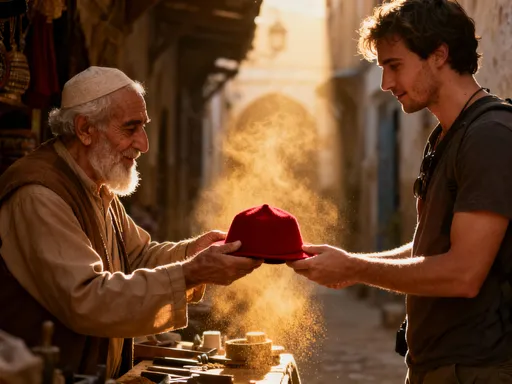
Purchasing directly from artisans like Madame Amina ensures that income stays within the community and helps preserve endangered skills. Some cooperatives, such as the Association des Artisans du Cameroun, offer visitors hands-on experiences. I tried my hand at weaving a small *kente*-style cloth, a task far more difficult than it looked. The loom was unforgiving, and my early attempts were uneven, but the women laughed kindly and corrected my posture. Later, I attempted *ndop* cloth printing, using carved wooden stamps to apply indigo dye in geometric patterns. Each stamp tells a story—some represent unity, others protection or fertility.
These crafts are not souvenirs in the commercial sense. They are expressions of identity, resilience, and continuity. When you hold a hand-carved mask or wear a raffia bracelet, you are touching something that has survived time, migration, and change. In a world of mass production, Yaoundé reminds us that beauty lies in the imperfect, the handmade, and the meaningful.
Flavors That Tell Stories: A Taste of Cameroonian Identity
In Yaoundé, food is more than sustenance—it is a language of love, history, and belonging. One of my most memorable meals took place at a *maquis*, a casual roadside eatery where plastic tables are arranged under a zinc roof. The air was thick with the aroma of grilled fish, fried plantains, and simmering stews. I sat with a local family who welcomed me as if I were a long-lost cousin. They served *ndolé*, a rich dish made with bitterleaf, peanuts, smoked fish, and beef, traditionally eaten with *fufu*—a soft, dough-like staple made from cassava.
Eating with my hands, as they did, felt intimate and grounding. There was no pretense, no cutlery—just shared food and laughter. “We eat this way to stay close to the earth,” one woman told me. “And to each other.” Meals in Yaoundé are communal events, often lasting hours, with dishes passed around and stories exchanged between bites. Even simple street food, like *achomo* (steamed plantain dumplings wrapped in banana leaves), carries layers of meaning. The banana leaf, for instance, is not just a wrapper—it imparts flavor and symbolizes care, as it must be carefully selected and prepared.
I was invited to join a home-cooking session with a family in the Obala neighborhood. We began by grinding spices in a large mortar—ginger, garlic, and grains of paradise—using a heavy wooden pestle. The rhythmic pounding became a kind of meditation. We then prepared *bush meat* stew, a traditional dish made with game such as antelope or wild boar, though domestic alternatives like goat are now more common due to conservation efforts. As we stirred the pot, an elder in the family shared how certain ingredients were once used for healing, while others marked seasonal changes. “This stew,” she said, “is for when the rains come. It warms the bones and brings people together.”
Cameroonian cuisine reflects the country’s diversity—French, British, and indigenous influences blend seamlessly. Yet in Yaoundé, the emphasis remains on freshness, seasonality, and tradition. Markets overflow with plantains, cocoyams, okra, and native peppers. Palm oil, with its deep red hue, is a staple, not just for cooking but for its symbolic value—it represents life and vitality. To eat in Yaoundé is not to sample exotic flavors, but to participate in a culture where every meal is an act of connection.
Festivals: When the City Wears Its Heart
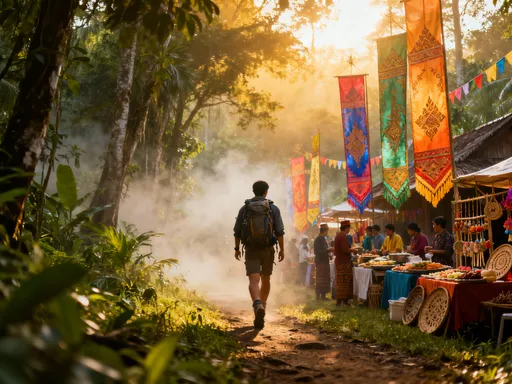
Visiting Yaoundé during a festival transforms the city into a living canvas of sound, color, and emotion. I was fortunate to be there during a regional dance competition tied to the larger *FENAC* (Festival National des Arts et de la Culture), a nationwide celebration of Cameroonian heritage. The streets came alive with processions—drummers leading dancers in elaborate costumes made of raffia, beads, and hand-dyed cloth. Children painted their faces in tribal patterns, while elders chanted ancient songs in unison. The energy was electric, yet deeply rooted in respect and tradition.
One performance, by a group from the Bulu ethnic community, left me breathless. Their dance told the story of a hunter’s journey through the forest, using precise movements to mimic animals and natural elements. The lead dancer wore a towering headdress made of feathers and carved wood, symbolizing spiritual authority. When the dance ended, the crowd erupted in song, clapping in rhythm. I was invited to join a circle dance, where I quickly realized that precision mattered less than participation. “Just move with the beat,” a young man told me, laughing as I stumbled. “The spirit is what counts.”
Festivals like *Ngondo*, celebrated by the Sawa people along the coast and observed in cultural centers across the country, emphasize ancestral veneration and community unity. Though Yaoundé is inland, the festival’s influence is felt through exhibitions, boat symbolism carved into masks, and performances that honor the sea. These events are not staged for tourists—they are acts of cultural preservation, passed down with pride. Attendance is not passive; visitors are encouraged to drum, dance, or simply stand in respectful silence. In these moments, the boundary between observer and participant dissolves.
The power of these festivals lies in their authenticity. There are no ticketed seats or VIP zones—just people, young and old, coming together to celebrate who they are. For travelers, this offers a rare opportunity: not to watch culture, but to live it, even if only for a day. The joy is contagious, the lessons profound. In a world increasingly dominated by digital experiences, Yaoundé’s festivals remind us that culture is strongest when it is shared, loud, and unscripted.
Navigating Culture with Respect: Practical Insights
Engaging with Yaoundé’s culture requires more than curiosity—it demands respect and mindfulness. One of the most important lessons I learned was to always ask before taking photographs, especially during ceremonies or of individuals. A simple gesture, a nod, or a phrase in French (“Puis-je prendre une photo?”) goes a long way. Many locals are happy to oblige, but the act of asking shows that you see them as people, not props.
Learning a few basic phrases in French or Ewondo, one of the major local languages, opens doors and deepens connections. Even saying “Bonjour” or “Merci” with genuine warmth can transform a transaction into a moment of human exchange. Hiring a local guide not only supports the economy but provides context that books and apps cannot. My guide, Jean-Claude, explained nuances I would have missed—why certain drum patterns are played at dawn, or why some masks are never photographed. His insights enriched my experience immeasurably.
Transportation offers another window into daily life. While taxis are available, riding a *bend-skin*—a shared minibus—gives a real sense of how people move through the city. These vehicles are crowded, often loud, and run on flexible schedules, but they are safe and deeply embedded in urban life. Sitting shoulder to shoulder with commuters, listening to music or snippets of conversation, I felt like I was part of the rhythm, not just observing it.
It’s also important to avoid treating traditions as spectacles. Drumming, dancing, and craftsmanship are not performances for entertainment; they are expressions of identity and spirituality. Approaching them with humility—asking questions, listening more than speaking, and participating only when invited—ensures that your presence is welcome. Respect is not a checklist; it is an attitude. In Yaoundé, where community is central, this mindset makes all the difference.
Why Yaoundé Stays With You: The Quiet Power of Real Connection
When I left Yaoundé, I didn’t carry a suitcase full of souvenirs. Instead, I carried moments—fleeting, profound, and irreplaceable. The memory of a grandmother teaching me a folk song in her backyard. The carver who explained the spirit behind his mask, not for sale, but for understanding. The shared laughter at a *maquis* where I tried, and failed, to eat *fufu* without making a mess. These were not curated experiences; they were real, unscripted exchanges of humanity.
In a world where travel is often reduced to checklists and photo ops, Yaoundé stands apart. It does not cater to convenience or comfort. It asks you to slow down, to listen, to participate. And in return, it offers something rare: authenticity. Here, culture is not preserved behind glass—it is lived in homes, markets, and courtyards. It is passed down through drumbeats, recipes, and hand-carved lines on wood.
What stays with you is not the place, but the feeling—the warmth of a handshake, the resonance of a drum, the taste of a shared meal. Yaoundé teaches that the deepest connections are not made through grand gestures, but through small, intentional acts: a smile, a question, a willingness to learn. It reminds us that travel is not about escaping life, but about diving deeper into it.
And perhaps that is the greatest gift of all. To return home not with trinkets, but with a changed perspective. To see your own life with new eyes, shaped by the rhythms of a city that doesn’t shout, but sings. Yaoundé doesn’t demand your attention—it earns it, quietly, one heartbeat at a time. And once you’ve felt that pulse, you carry it with you, long after you’ve left its hills behind.